Save the Sound Holds First Residential Rain Garden Planting in Southington

Last weekend, we held the first residential rain garden planting  as part of our Quinnipiac River Watershed Project.

Rain Garden group shot - 5.11.13Despite the rainy weather, volunteers spent four hours constructing the garden, planting White Astilbe, Lowbush blueberry, Cinnamon fern, Mountain laurel, Inkberry and Red-osier dogwood.

Continue reading

What’s Next – Action Items From the Long Island Sound Citizens Summit

At the end of our Long Island Sound Citizens Summit, we spent awhile with participants discussing Sandy and how we can best prepare for future storms.

IMG_6090

Moderated by Adrienne Esposito of Citizens Campaign for the Environment and Nancy Seligson, Town Supervisor for the Town of Mamaroneck, participants came up with a great list of Action Items, as listed below:

  • Use Louisiana Coastal Restoration Plan to assist in coordinating projects
  • Share Best Management Practices among communities
  • Update local zoning commissions
  • Collective good versus private property rights
  • Build associations between Planning & Zoning Commissions with Marine Waters Protection
  • More education of sea level rise to zoning/planning/municipalities
  • Financial incentives to move TDRs (reverse mortgages) to allow land to revert back
  • Staff training of climate change
  • Invite and include corporations
  • “Ken Feinberg” model for funding distribution

We want to hear from you! What do you think of the list of Action Items above? Are any missing? Let us know your ideas by commenting on this blog or posting on our Facebook wall.

Save the Sound & Cornell University Cooperative Extension Partner to Restore the Sound’s Submerged Fish Habitat

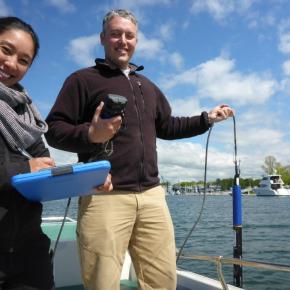
Last week, we partnered with the Cornell University Cooperative Extension of Suffolk County for our third third event engaging volunteers in restoring the Sound’s submerged aquatic vegetation – eelgrass. Friday’s event took place at the Clinton Town Marina.

clinton town marina

Continue reading

Federal Funding for Post-Sandy Sewage Plant Upgrades, but Cuts to EPA’s LIS Cleanup

The federal government is making $340 million available to New York for repairs and upgrades to sewage treatment plants and water filtration plants damaged by Superstorm Sandy. But it also is cutting about $300,000 from the U.S. Environmental Protection Agency office that is overseeing the environmental cleanup of Long Island Sound.

Storm surge flooding in Yonkers wastewater treatment plant. (Photo courtesy Michael Coley.)

The Sandy Supplemental Appropriation money will be funneled through the state Department of Environmental Conservation and will mostly consist of low- or no-interest loans, although about 30 percent can be used for direct grants, according to the EPA, which made the announcement Thursday.

The money will pay for standard improvements such as raising equipment out of flood-prone basements and installing backup power systems.

But EPA said that officials will also consider proposals for green infrastructure, and for the creation of dunes and wetlands “that are capable of mitigating storm water impacts.” You can read the EPA news release here.

Earlier this week, the Climate Central non-profit group released a report that said Sandy resulted in 11 billion gallons of untreated and partially treated sewage being spilled into waterways, including in New York and Connecticut. Many treatment facilities were damaged by flooding from storm surges and rain water. (Read more in Wednesday’s post.)

Flood damage in Yonkers wastewater plant secondary control room. (Photo courtesy Michael Coley.)

Flood damage in Yonkers wastewater plant secondary control room. (Photo courtesy Michael Coley.)

The timing of Sandy’s storm surge, which did not arrive at the highest tide, spared Long Island Sound sewage treatment plants from more significant damage. But Irene and Sandy clearly demonstrated the need to make wastewater infrastructure more resilient in the face of climate change. Funding to modify pump stations and electrical systems is absolutely necessary, and planning for future expansions and plant sites is critical.

New York needs the help but Save the Sound would have liked to see Connecticut receive funding as well. In less than two years, the Long Island Sound region has been walloped by four major storms. Though only some hit Connecticut directly, each was a direct hit on the state’s infrastructure, economy and way of life.

The Sandy Supplemental Appropriations will help the region as a whole. For Connecticut communities to make similar improvements, however, it seems as if they will have to rely on legislators in Hartford to ensure that the state’s Clean Water Fund is adequately funded and that bills such as SB 1010, which incorporates sea level rise impacts as a consideration for Clean Water Fund financing, pass.

Meanwhile, federal sequestration is likely to result in cuts to EPA’s Long Island Sound Study program, which is overseeing the Sound cleanup, including the nitrogen-removal effort designed to end the low-oxygen crisis that turns much of western Long Island Sound into a dead zone for marine life in summer. The Journal News reported the cuts this morning.

EPA’s Long Island Sound office is expected to see $300,000 in cuts. Its federal funding for this year was $4.5 million. Details about which programs might have to be cut are not yet available.

Posted by Tom Andersen, NY program and communications coordinator for Save the Sound

New Report Details 11 Billion Gallons of Sewage Overflows During Superstorm Sandy

On the heels of last week’s Long Island Sound Citizens Summit exploring Superstorm Sandy and climate change, the nonprofit research group Climate Central released a new report yesterday on the amount of sewage that spilled into local waterways during and after Sandy. The report also emphasizes the long-term vulnerability of sewage treatment systems because of sea level rise and the expected increase in big storms.

short beach branford wave 1 edit

Among the eight hardest hit states – New York, New Jersey, Washington, D.C., Maryland, Pennsylvania, Connecticut, Virginia, Rhode Island and Delaware – 11 billion gallows of sewage overflowed into our waterways as a result of Sandy. As the report details, to put that into perspective, that amount is equivalent to “New York’s Central Park stacked 41 feet high with sewage or more than 50 times the BP Deepwater Horizon oil spill.”

Continue reading

Long Island Sound Citizens Summit Recap

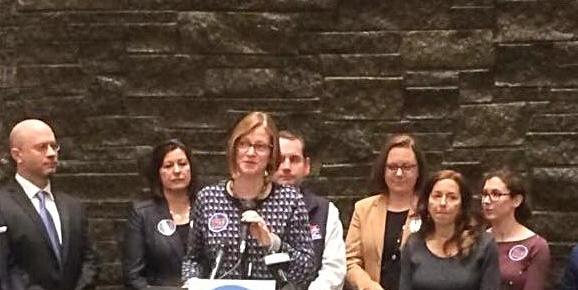
Friday was the Long Island Sound Citizens Summit and for those who couldn’t make it, you missed a great day of conversation and information sharing. Over 130 people came out for the summit at Iona College in New Rochelle, which was dedicated to longtime Long Island Sound advocate Art Glowka.

DSC_0024

The general theme of the day expressed by the speakers was that there is a new reality for the Long Island Sound region- rising sea levels, higher storm surges, and more frequent storms- and we need to be taking steps to prepare the region for this future.

Continue reading

MONDAY: Protecting Plum Island: An Informational Gathering for Local Residents in the North Fork

Join Save the Sound and the Group for the East End for an informational discussion about the future of Plum Island and the steps that are being taken to protect it from development. The event will take place on Monday, April 29 from 6:30 P.M. – 8:30 P.M. at Poquatuck Hall in Orient, NY.

Plum LI event invite April 2013 (final3)
The event will feature a panel discussion with local advocates as well as some words from Congressman Tim Bishop.

We hope to see all you New Yorkers there!

Posted by Rebecca Kaplan, director of communications for CFE/Save the Sound